How to Renovate a Condo in St. Petersburg: Step-by-Step

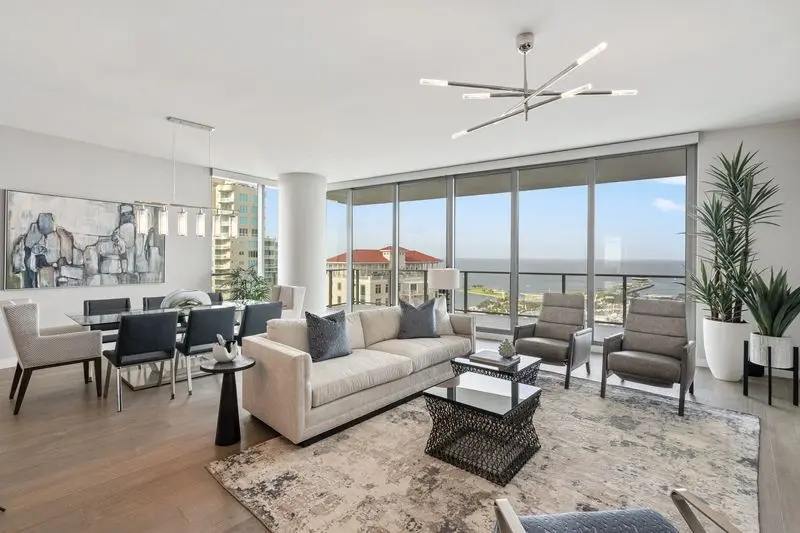
Renovating a condo in St. Petersburg means navigating HOA permit-application packages, elevator scheduling, noise restrictions, plumbing-stack constraints, and Pinellas County permits before you touch a single wall. It’s a different process than renovating a house. If your building is 4 stories or taller, your contractor needs a Florida commercial unlimited GC license, not a residential one. Most guides skip the parts that actually trip people up.
Here’s the 7-step process from a Pinellas County GC who specializes in condo work: downtown St. Pete high-rises along Beach Drive, Snell Isle waterfront condos, beach-side buildings up to Indian Rocks Beach. We run every condo project on Time & Materials with weekly budget reports so you see every elevator fee, HOA application cost, and 15% trim-waste line item before it hits the invoice.
From initial HOA permit-application through final walkthrough, here’s how it actually runs at our shop.
Most of the work in this guide applies anywhere there’s a condo board, but downtown St. Pete buildings have their own quirks — service-elevator rules, freight-window scheduling, asbestos triggers in the 1980s mid-rises. See our downtown high-rise context for building-specific notes.
1. Assessing Your Condo
Evaluate Your Space
Walk every room with a notebook before you call any contractor. Photograph existing finishes (cabinets, countertops, tile, flooring, paint), inspect the plumbing under every sink for cast-iron drain stubs (1985-and-older buildings frequently still have cast iron), check whether your ceilings are concrete (most high-rises are, that constrains lighting and electrical), and identify which walls are non-bearing (concrete-block demising walls between units stay; interior partition walls usually move). This pre-call inventory determines whether your scope is a finishes refresh ($200-$300/sqft band) or a full reconfiguration with plumbing and electrical work ($300-$400+/sqft). St. Pete condos built before 1985 frequently need cast-iron drain replacement during any plumbing-stack work, budget that in upfront.
Set Your Goals
Identify what you want from this renovation project. Do you need to enhance functionality, or is it about the looks?
You can choose to make your condo or co-op modern. Or, make it more livable with smart storage solutions. You need to determine that. Clearly defined goals work as a roadmap. It'll keep your renovation focused and ensure the final result matches your vision.
2. Understanding Condo Regulations
Check HOA Rules
Before you commission any drawings, pull your building’s CC&Rs (Covenants, Conditions, and Restrictions) and your HOA’s renovation rider. Read both. Then identify which two documents your association will require for the permit-application package: most St. Pete buildings want stamped architectural plans, finish specifications, contractor license + insurance documentation (general liability + workers’ comp + waiver of subrogation naming the association as additional insured), and a hold-harmless rider. Board cadence drives timeline. Some associations only review at monthly meetings, which sets the floor regardless of how fast your contractor moves.
The CC&Rs typically govern: structural changes (almost always restricted to non-bearing walls), plumbing-stack relocation (often prohibited because plumbing lines in a 20-story building can’t be moved without major approval), noise levels and working hours (frequently 9am-5pm Monday-Friday, no jackhammering on weekends), elevator booking (service elevator reservations + quilted padding + insurance riders for elevator damage), and licensure thresholds. If your building is 4 stories or taller, Florida licensing requires a commercial unlimited GC license, not a residential GC license, on the permit. Most residential contractors cannot pull permits for high-rises; verify your GC’s license tier before you sign.
“Realistic budget for condo remodels is similar to a house remodel except no roof or foundation work. Costs unique to condos include parking and extra protection time for carpenters and subs. Most HOAs require an application and want to see the permit before work starts — adds a week or two but mostly an annoyance. Insurance requirements are standard — liability and workers’ comp — and you need a commercial unlimited GC license for buildings over four stories.”
3. Budgeting for Your Renovation
Create a Realistic Budget
St. Petersburg condo budgets follow the same per-square-foot bands as house remodels, $200-$400/sqft depending on scope and finish tier, minus roof and foundation (the building owns those). Add $20,000-$60,000 in condo-specific logistics premium on a full-unit renovation: HOA application fee, association insurance riders, structural engineer stamp for any slab penetration (post-tension cable proximity check), elevator reservation fees, parking permits for staging, and 15% trim-waste from elevator-size constraints (a 10-foot service elevator forces 12-foot baseboards and casing to be cut in the garage). Set aside a 10-20% contingency on top. Older downtown buildings reliably surface cast-iron drain replacement, asbestos-containing floor tile (pre-1985), and concealed plumbing-stack damage during demo. Run your project on Time & Materials with weekly budget reports if you want every elevator fee, parking permit, and trim-waste line shown as it happens, not buried in a lump-sum allowance.
Consider Financing Options
Everyone doesn't have the cash on hand for a full renovation. If you need you can look into financing options. Personal loans, credit cards with promotional rates, or home equity lines of credit can help cover costs. Calculate the pros and cons to find the best solution for your financial situation.
4. Planning Your Renovation
Create a Timeline
Build a phased schedule against three drivers: HOA approval (2-6 weeks after submitting the permit-application package, gated by board meeting cadence), Pinellas County permit issuance (typically 4-8 weeks for condo interior work involving structural, plumbing, or electrical changes), and material lead times (cabinetry 8-14 weeks, custom tile 4-6 weeks, impact windows 8-12 weeks if the scope includes window replacement). Single-room scope (kitchen-only or bathroom-only) construction runs 6-10 weeks once permitted; full-unit renovation runs 10-16 weeks; high-end full renovation with custom cabinetry and reconfiguration runs 16-24 weeks. The phasing matters because elevator booking is a finite resource. Service elevators in downtown St. Pete buildings typically book one trip per day per contractor, so demolition haul-out, drywall delivery, and cabinet install each consume one full reservation window.
Hire Professionals vs. DIY
For condo work, the DIY-vs-pro line falls in a different place than house renovations. Cosmetic-only refinishing (paint, hardware swaps, light fixture replacement that doesn’t alter the electrical box) usually doesn’t trigger HOA approval or permits and is genuinely DIY-able. Anything touching plumbing stacks, the electrical panel, structural elements (even non-bearing walls in some buildings), HVAC, impact windows, or slab penetrations needs a licensed contractor. For buildings 4 stories or taller, that contractor must hold a Florida commercial unlimited GC license, not a standard residential one.
When you’re hiring, verify three things: license tier (residential GC vs commercial unlimited GC, ask for the license number and look it up on the Florida DBPR site), insurance certificate naming your association as additional insured (mandatory for HOA approval at most St. Pete buildings), and condo-specific experience (review the contractor’s portfolio for elevator scheduling, HOA permit-application work, and concrete-ceiling lighting installations). For background on the HOA + elevator coordination side, see our condo remodel HOA + elevator guide. Revolution carries 20+ W-2 carpenters in-house, not subs juggling three other jobs, which matters in condos because elevator slots and noise windows don’t accommodate crew turnover.
5. Design Ideas and Inspirations
Kitchen Renovations
Condo kitchens have hard constraints residential kitchens don’t: plumbing-stack location pins your sink within a few feet of its current spot (relocating the stack requires HOA approval and is typically denied in 20-story buildings), the gas line either runs to your unit or doesn’t (most St. Pete high-rises are all-electric), and concrete ceilings mean recessed lighting requires a sleeper system to drop wafer can lights and exhaust fans. Inside those constraints, the moves that earn the most are: removing non-bearing walls between kitchen and living room (open-concept gain), specifying cabinets with depth that maximizes the available footprint without blocking sightlines, and choosing quartz over granite for spec-grade durability with less HOA-finish-committee friction. See our St. Pete condo remodel scope and pricing hub for a full constraint walk-through, or our kitchen remodel service page for general kitchen scope.
Bathroom Upgrades
Condo bathrooms have one risk residential bathrooms don’t: water intrusion to the unit below is a Florida Building Code violation AND an HOA insurance claim. The mitigation is the membrane. Specify a Schluter Kerdi waterproofing system (or equivalent sheet membrane) under all tile surfaces, lapped up walls and over the curb, with a Schluter Kerdi-Drain assembly through the slab penetration. Standard tile-and-grout-only construction is insufficient for the liability your association underwrites.
Inside that waterproofing envelope, the condo-bath upgrades that actually move the needle are: walk-in shower in place of tub (most St. Pete owners want it), recessed wall niches built into the demising-wall thickness (no encroachment on the unit’s usable floor area), and a wall-hung vanity with under-cabinet LED to make a 5x8 or 6x9 bathroom read larger. Pull your bathroom remodel scope guide for finish-tier options. For older downtown buildings, factor in cast-iron drain replacement under the bathroom slab. 1985-and-older condos reliably show cast-iron drain stubs that crack under modern bathroom water flow.
Living Area Enhancements
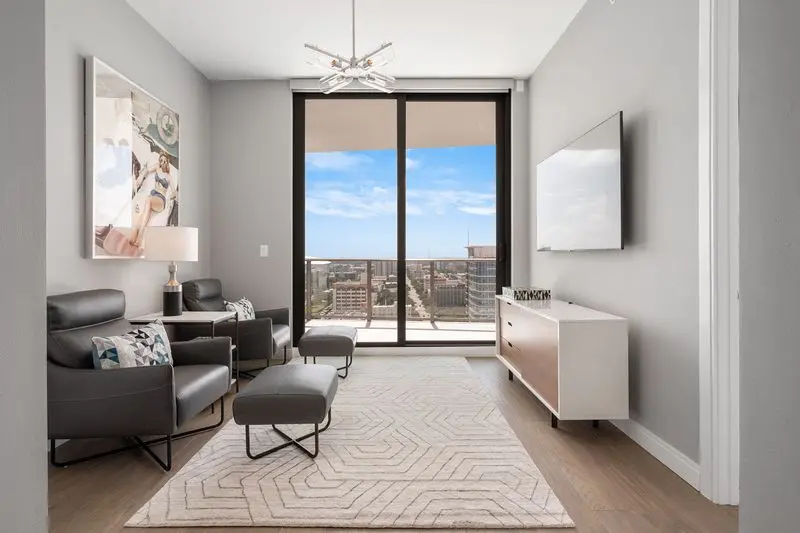
Living-area work in a condo turns on three constraints: ceiling type (concrete vs. drywall-on-furring), HOA finish-committee restrictions on flooring noise (most associations require sound-attenuation underlayment under hard-surface floors to protect the unit below), and impact-window compliance if you’re replacing windows facing the high-velocity hurricane zone. For St. Pete waterfront buildings and beach condos, impact-rated glazing is generally mandatory under the current Florida Building Code. Budget $1,200-$3,000 per opening installed depending on size and impact rating. For inland-side units and lower-elevation buildings, the original windows may not require impact-rated replacement. Verify with the HOA and the City of St. Petersburg permitting office before specifying.
For background on how downtown high-rise constraints differ from beach-condo constraints, see our downtown St. Pete condo remodel guide and the Downtown Condos service area page for neighborhood-specific HOA and elevator coordination notes.
Outdoor Spaces (if applicable)
Balcony and lanai work in a condo is governed by HOA architectural-review-committee restrictions on three things: weight load (potted plants and furniture together can’t exceed the engineered live-load posted in your CC&Rs, typically 60 psf for residential balconies), tile or finish replacement (the balcony substrate is usually the building’s structural concrete deck and any waterproofing penetration risks the unit below), and visible-from-street modifications (planters, screens, awnings frequently require committee signoff). For high-rise units in higher-velocity hurricane zones along the St. Pete waterfront and beach buildings, all balcony rail and screen replacements must meet the current Florida Building Code wind-load tables. Verify the rail and any tensioned-fabric awnings carry FBC-compliant ratings before installation.
6. Executing the Renovation
Preparation and Cleanup
Pre-construction prep on a condo project covers four items the contractor handles and one the owner handles. Contractor: install hallway runners and corner guards from the unit door to the service elevator (wall and floor protection on every common-area surface), install ram board over interior flooring that’s staying, seal HVAC vents to prevent dust migration through the building’s shared system, and post the HOA-approved schedule with start time, end time, and noise window on the unit door. Owner: vacate or move all soft goods (couches, bedding, clothing) out of work areas. Storage rental from $80-$200/month covers most full-unit jobs. For furniture too large for the elevator, schedule with the building’s loading-dock and freight elevator a week ahead.
Daily cleanup in a condo isn’t optional. HVAC dust migration and hallway debris affect every neighbor on your floor. Our crews vacuum the work area + hallway each end-of-day, double-bag all construction waste before it leaves the unit, and route waste to the building’s designated dumpster on the contractor schedule. Final cleanup before walkthrough: deep-clean every surface, polish all glass and stainless, vacuum HVAC vents, and replace any filters that absorbed construction dust.
Managing the Renovation Process
The owner’s job during construction is decision-cadence, not site-management. The general contractor runs the schedule, the HOA coordination, the elevator booking, the inspection scheduling with the City of St. Petersburg Building Department, and the daily crew supervision. You’re needed at three decision points: pre-construction selection sign-off (cabinets, tile, plumbing fixtures, lighting, paint), mid-project change-order approvals (often unavoidable when demo surfaces a hidden cast-iron drain or post-tension cable conflict), and final walkthrough punch-list. On a Time & Materials project, expect a weekly budget report itemizing every elevator fee, parking permit, material delivery, and labor hour against the running budget. That’s the cadence that catches surprises before they become disputes.
Neighbor relations are part of executing the project, not an afterthought. Here’s how Jeremy describes the way our crews handle high-end condo neighbors during noisy work windows:
“Design considerations and constraints — structural or utility runs inside a unit aren’t negotiable, so we build cabinetry or custom furniture around them. Often neighbors have done similar projects so we can learn what’s possible. Biggest challenge with condo remodels is dealing with the association and nosy neighbors — they’re a hindrance, never a help. We minimize disruption by befriending neighbors and letting them know what we’re doing. In higher-end condos if we’re jackhammering floors or ceilings we have to give a short window and notify neighbors. Sometimes we put notes on doors — it’s good marketing and makes us look less like assholes.”
7. Final Touches and Decor
Adding Personal Touches
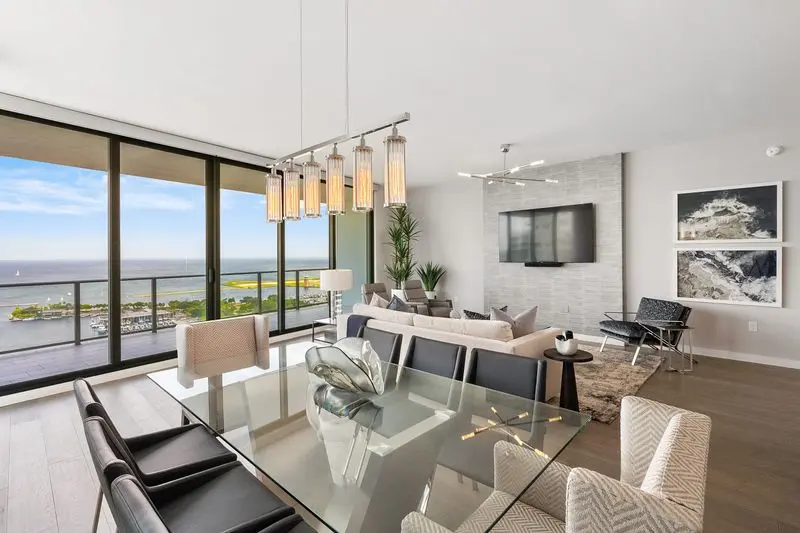
Final-touch work in a condo follows the same finish-installer sequence as a house: window treatments installed last (after paint and trim are complete), area rugs sized to the visible flooring exposed by the new layout, lighting and shade controls programmed once the cabinet hardware is on. The constraint particular to condos is that some HOA architectural-review committees require finish-installer certificates of insurance for any contractor coming through the building, even for window-treatment installation. Verify the certificate-of-insurance threshold before you book installers; a few St. Pete buildings require it for any vendor working over $5,000 of scope.
Styling and Furnishing
Pick furniture that matches the design you are going for. Add a mix of textures, colors, and materials to create visual interest. For example, you can pair modern kitchen finishes with sleek bar stools. Or, balance a cozy living room with a combination of soft fabrics and metal accents. In this stage, you can consult an interior designer for ideas and suggestions.
Frequently Asked Questions (FAQs)
How much does it cost to renovate a condo in St. Petersburg?
St. Pete condo renovations follow the same per-square-foot bands as house remodels, $200 to $400 per square foot depending on scope and finish tier, minus roof and foundation. A finishes-only refresh runs $20,000 to $50,000. A full-unit renovation runs $50,000 to $200,000+. See our condo renovation cost guide for finish-tier breakdowns, or our whole-house renovation page for non-condo scope.
Add $20,000 to $60,000 in condo-specific logistics premium on full-unit work: HOA application fees, association insurance riders, structural engineer stamps for slab penetrations, elevator reservation fees, parking permits, and 15 percent trim-waste from elevator-size constraints.
What renovations add the most value to a condo?
Kitchen and bathroom renovations are the highest-impact improvements for downtown St. Pete and beach-area condos. Inside the building constraints (plumbing-stack location, concrete ceilings, non-bearing-wall layout), the moves that matter are: opening kitchen-to-living sightlines by removing non-bearing walls, walk-in shower with Schluter Kerdi waterproofing in place of tub, recessed wall niches, wall-hung vanity, and quartz counters for spec-grade durability. Impact-rated window replacement adds value in waterfront and beach buildings where Florida Building Code requires it.
Do downtown St. Pete condos require a 4-story commercial unlimited GC license?
Yes. Florida licensing requires a commercial unlimited GC license, not a residential GC license, for any contractor pulling permits on buildings 4 stories or taller. Most St. Pete downtown high-rises, beach-area condo towers, and waterfront buildings fall above this threshold. Most residential contractors cannot legally work on these buildings. Revolution holds the commercial unlimited GC license required for high-rise condo work. Verify your contractor’s license tier on the Florida DBPR site before signing.
How do you handle neighbor noise and jackhammer notification in a condo remodel?
High-end condo work that involves jackhammering floors or ceilings, typically slab penetrations for plumbing or post-tension cable inspections, gets a short, defined work window agreed with the HOA, plus advance notification to immediately-adjacent neighbors. Our standard practice is a brief written note on neighbor doors before any high-noise day, plus an in-person introduction when the crew first arrives. The notification is partly courtesy and partly insurance against an HOA noise complaint stopping work mid-day.
Are condo renovations worth it?
For owner-occupied condos in Pinellas County, well-scoped renovations frequently recoup most of the cost at resale and substantially improve daily livability, particularly kitchen, bathroom, and lighting work. The payoff is highest when the work corrects original-developer cost-cutting (laminate counters, dated lighting, base-grade fixtures) and brings the unit toward current finish-tier standards. The payoff is lower for purely cosmetic changes that the next buyer will want to redo.
How long does it take to renovate a condo?
HOA approval after submitting a complete permit-application package: 2 to 6 weeks (gated by board meeting cadence). Pinellas County or City of St. Petersburg permit issuance: 4 to 8 weeks for work involving structural, plumbing, or electrical changes. Construction: single-room scope (kitchen-only or bathroom-only) runs 6 to 10 weeks; full-unit renovation runs 10 to 16 weeks; high-end full renovation with custom cabinetry and reconfiguration runs 16 to 24 weeks. Plan a 4 to 9 month total project from first call to final walkthrough.
Conclusion on How to Renovate a Condo
A condo renovation in St. Petersburg comes down to seven decisions: scoping the work against the building’s constraints, reading the CC&Rs and HOA permit-application package, building a per-square-foot budget plus the $20,000-$60,000 logistics premium, scheduling against HOA + Pinellas County permit + material lead times, designing inside the structural and utility-run boundaries, executing with daily protection and neighbor notification discipline, and walking through the final punch-list against the original spec. Get those seven right and a condo renovation is a roughly 4-9 month project from first call to final walkthrough.
If you’re planning a condo renovation in Pinellas County (downtown St. Pete high-rises, Snell Isle waterfront, Old Northeast historic-district condos, beach buildings up through Indian Rocks), reach out to Revolution Contractors. We hold the Florida commercial unlimited GC license required for buildings 4 stories and taller, run every project on Time & Materials with weekly budget reports, and staff with 20+ in-house W-2 carpenters who know condo logistics. See our full St. Pete condo remodel scope, pricing, and process page or our condo renovation cost guide for a finish-tier walk-through. For permit reference, see the St. Petersburg Building Department.