St. Petersburg's 5 Real Construction Challenges
1. Pre-1940s Housing Stock: Scope That Doesn't Show on a Walk-Through
Old Northeast, Kenwood, Crescent Lake, and the surrounding neighborhoods are some of the most desirable addresses in Pinellas County. They're also full of surprises.
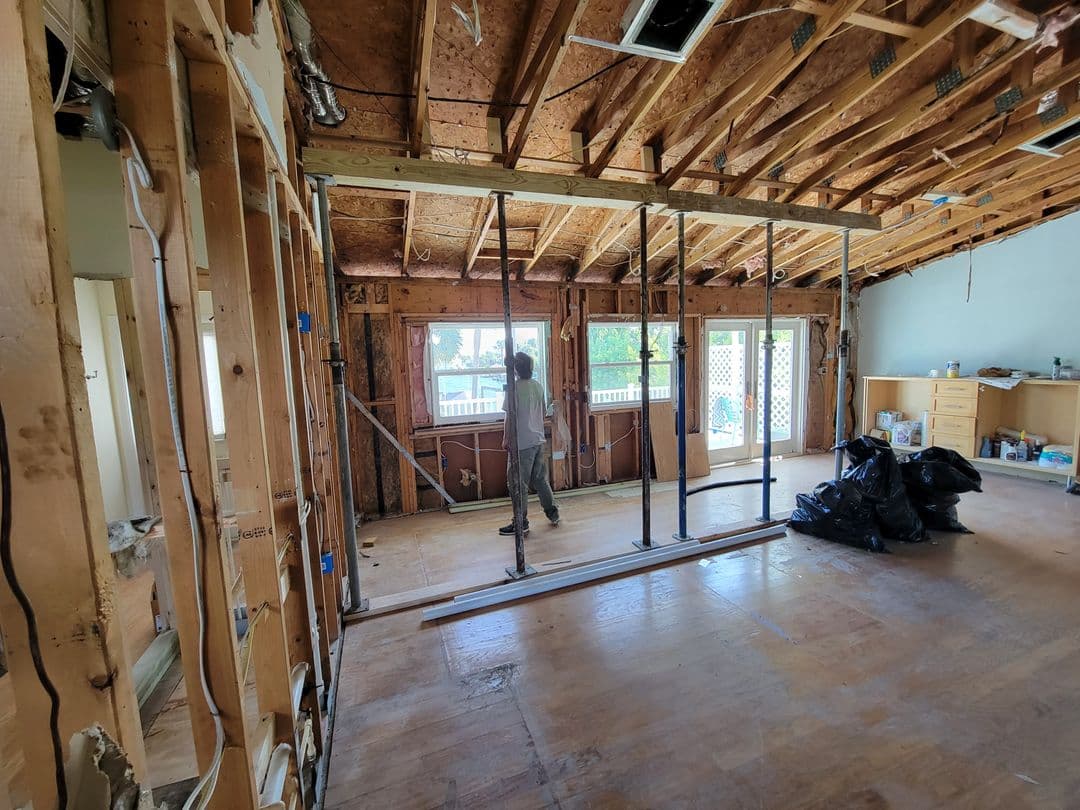
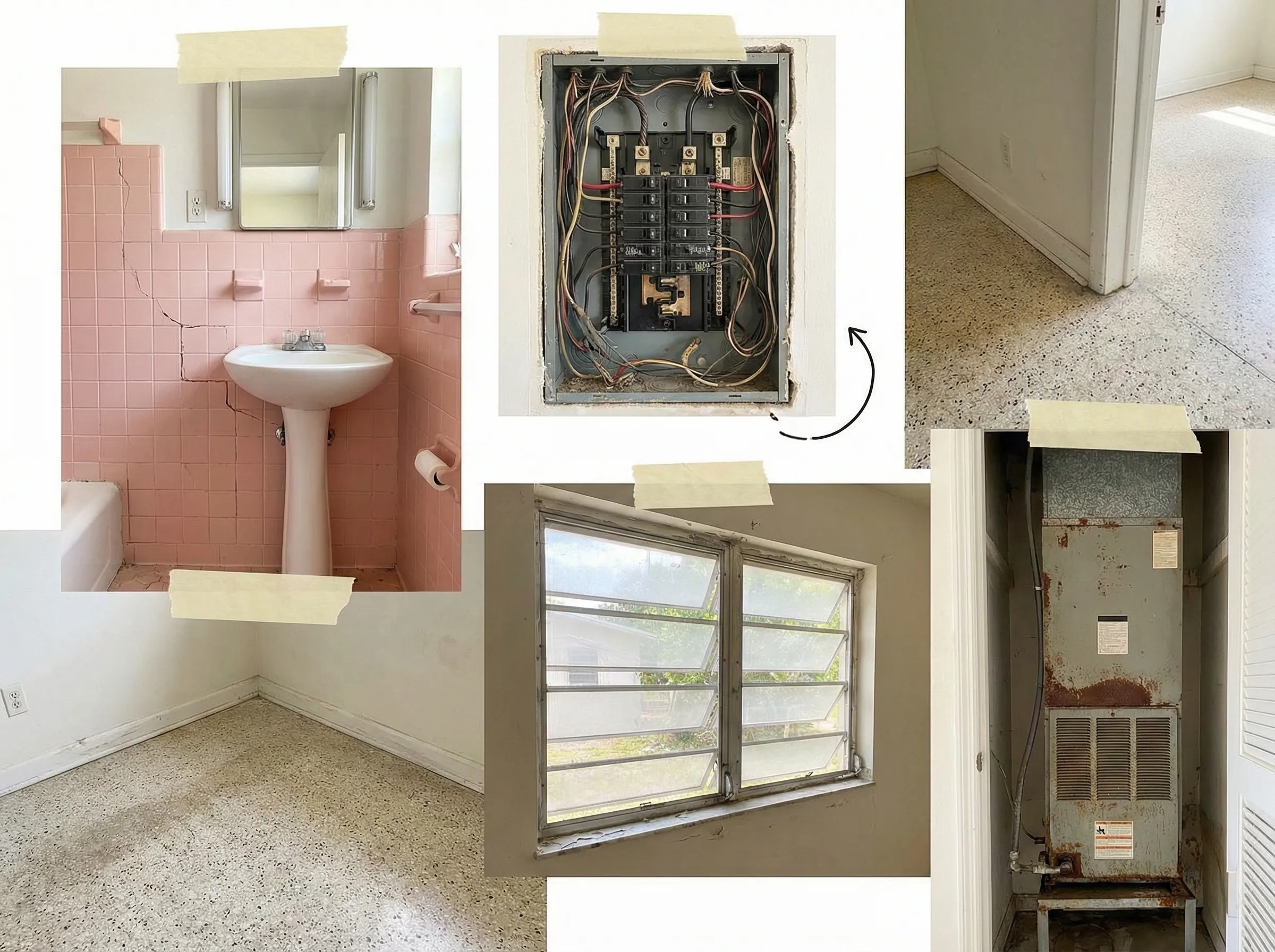
Open a kitchen wall in a 1920s bungalow and you'll likely find: knob-and-tube wiring that can't be extended without full circuit replacement, cast iron drain lines that crack when disturbed, galvanized steel supply lines approaching the end of their service life, and plaster walls that behave nothing like drywall during demo or repair. Panel capacity in these homes often tops out at 60–100 amps — inadequate for a modern kitchen or primary bathroom remodelwithout a service upgrade.
A contractor who prices a fixed bid without accounting for what 1920s St. Pete construction actually looks like will either underprice the job and eat the loss, or hit you with change orders after demo. Neither is the outcome you want.
2. Historic District Review Boards: The Timeline You Didn't Plan For
St. Petersburg has eight locally designated historic districts — Granada Terrace, the Old Southeast Hexagon Block Preservation District, and six others in the Old Northeast and surrounding areas. Kenwood carries a National Register designation covering 2,203 historic buildings across 375 acres. If your property sits within any of these districts, any exterior alteration — window replacement, door changes, roofline modifications, additions — requires a Certificate of Appropriateness from the Historic Preservation Board before you can submit for a building permit.
That review adds time. In our experience working historic districts across St. Pete, plan for 4–8 additional weeks in the permit phase for exterior work in designated districts. The review board has specific material requirements: replacement windows must match original profiles, exterior finishes must be period-appropriate, additions must not be visible from the primary street.
A contractor who doesn't know the review board's preferences will get a denial and start over.
3. The St. Pete Building Department: Real Talk
If you've heard that the City of St. Petersburg's Development Services department is difficult to move through, you've heard correctly. This is not a knock on the staff — it's a staffing and volume reality that affects every permitted project in the city. Standard permit reviews can run 2–4 weeks. Complex projects with structural work, plan changes, or flood zone components take longer. Re-submission cycles add additional time.
What this means for your project: the permit phase needs to be scoped into your timeline honestly, not optimistically. We structure applications to minimize review cycles — complete documentation on first submission, correct flood zone calculations, pre-confirmed historic district status where applicable. We've been through this process enough times to know what the reviewers need. That said, we won't promise you a 2-week permit on a complex St. Pete project.
4. The FEMA 50% Rule in AE Flood Zones
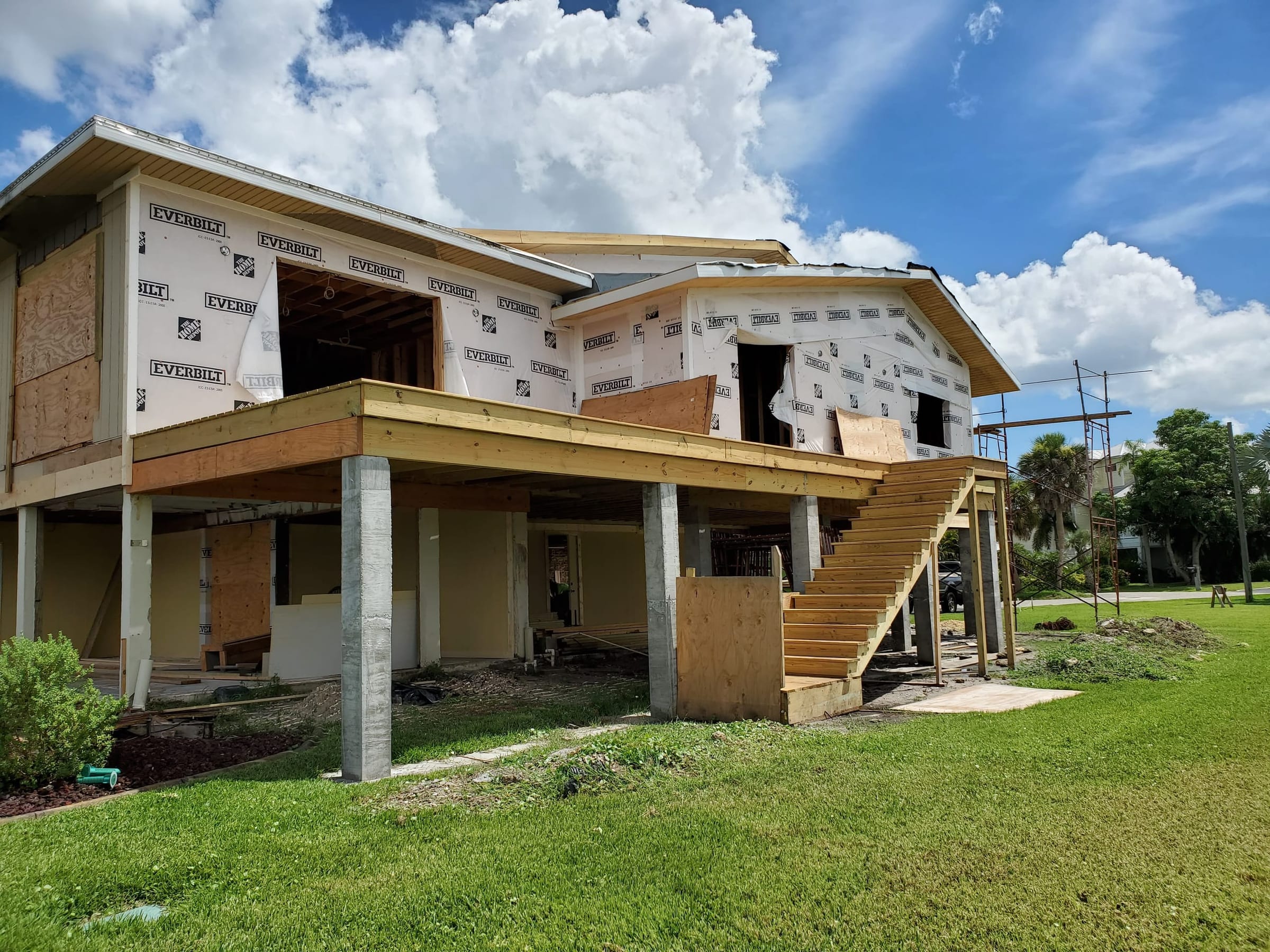
If your St. Pete home is in Shore Acres, Snell Isle, Venetian Isles, or Coquina Key, there's a calculation you need to know before you pull a permit. The City of St. Petersburg enforces FEMA's Substantial Improvement rule: any permitted renovation where the improvement cost equals or exceeds 50% of the pre-improvement market value of the structure triggers full flood code compliance — including bringing the structure up to current Base Flood Elevation (BFE) requirements.
The math catches homeowners off guard. A $200,000 kitchen and primary bath remodel on a $380,000 Shore Acres structure is already past that line. And the rule is cumulative — previous permitted improvements on the property count toward the threshold.
If your project is in or near an AE zone, that calculation needs to happen before permits are submitted, not after.
5. Salt Air and Material Selection
Every St. Pete project — not just waterfront work — involves salt air exposure that standard interior-grade hardware doesn't survive long-term. Fasteners corrode. HVAC components fail early. Exterior hardware oxidizes within a few years. Contractors who primarily work inland markets often specify materials that look right on paper and underperform in a coastal environment.
Coastal-grade stainless fasteners, marine-rated coatings, and appropriately spec'd exterior materials aren't upgrades in St. Pete — they're baseline. This applies whether you're on the water in Snell Isle or a block off the bay in Old Southeast.